Modern AI and Agent Models in the Skilled Trades – Tradition Meets Digital Innovation
Learn how AI and agent systems are revolutionizing the skilled trades without losing traditional values. Concrete examples and practical applications for skilled trade businesses.

The German skilled trades sector stands for quality, precision, and decades of tradition. That's exactly why many feel that the skilled trades and high-tech don't mix at all. But: Artificial Intelligence (AI) and modern agent systems are becoming the biggest opportunity to catapult the skilled trades into the digital age without losing the workshop dust and human touch. Sounds far-fetched? It is – but it works.
In this article, we show specifically how Large Language Models (LLMs) like ChatGPT and AI agents can provide more efficient processes, smart planning, better information flow, and excellent customer service in skilled trade businesses. We'll look at examples, openly discuss potential obstacles, and show practical implementation options for digital transformation and agent-based process optimization in skilled trade businesses.
- Process Optimization: AI agents automate routine workflows, identify weaknesses, and relieve staff. Administrative workload drops noticeably.
- Communication: AI tools improve internal documentation and enable 24/7 customer service through intelligent chatbots and answering systems.
- Automation: From quote creation to inventory management – AI takes over repetitive tasks and integrates seamlessly with existing industry software.
- Resource Management: Intelligent order planning, inventory management, and predictive maintenance optimize operational procedures and reduce costs.
- Practical Examples: Two fictional example businesses – "Müller Carpentry" and "Schmidt Heating" – illustrate how AI provides relief as a "digital apprentice", in route planning, and in predictive maintenance.
- Implementation Roadmap: Starting costs from around €1,000; the payback period depends on the use case. Funding options have to be checked program by program.
AI-Supported Process Optimization in Craft Businesses
Most craft businesses have enormous optimization potential in their workflows that often remains untapped. AI systems can analyze these processes and uncover weak points. Suddenly, it becomes clear where time dissipates or where the same bottlenecks consistently occur.
An example: In a carpentry shop, a learning system recognizes that the daily bottleneck in certain cutting work always occurs at ten o'clock in the morning – then the AI makes a clear suggestion: adjust the sequence and eliminate the time congestion. This increases productivity without stressing the employees.
Agent-based systems take this to the next level: AI agents work independently in the background and make decisions for everyday routine processes. An agent distributes tasks to the right teams, manages material flows, and checks if new orders are due. This especially relieves businesses that are tightly staffed – and provides more time for the essentials.
Those who hate administration and scheduling will breathe a sigh of relief here: Once agents act somewhat autonomously, the endless back-and-forth of appointment scheduling, orders, or accounting is eliminated. This saves time and nerves – especially in small businesses where people already wear multiple hats. And in larger companies? There, machine learning delivers precise forecasts for material requirements, capacity planning, and more. The processes become more fluid, and the annoying guesswork in ordering has an end.
Context: Businesses introducing AI-supported processes typically report noticeably reduced administrative workload, fewer incorrect orders in material procurement, lower storage costs, and better planning accuracy. Robust cross-company study figures for the skilled trades are still scarce – which makes your own before-and-after measurement in a pilot project all the more important.
In the end, AI becomes an invisible digital helper that takes over tedious routine jobs while the core team continues to practice classic craftsmanship. The operations manager remains in charge, AI provides the finishing touches in the background.
Improving Communication and Customer Service with AI
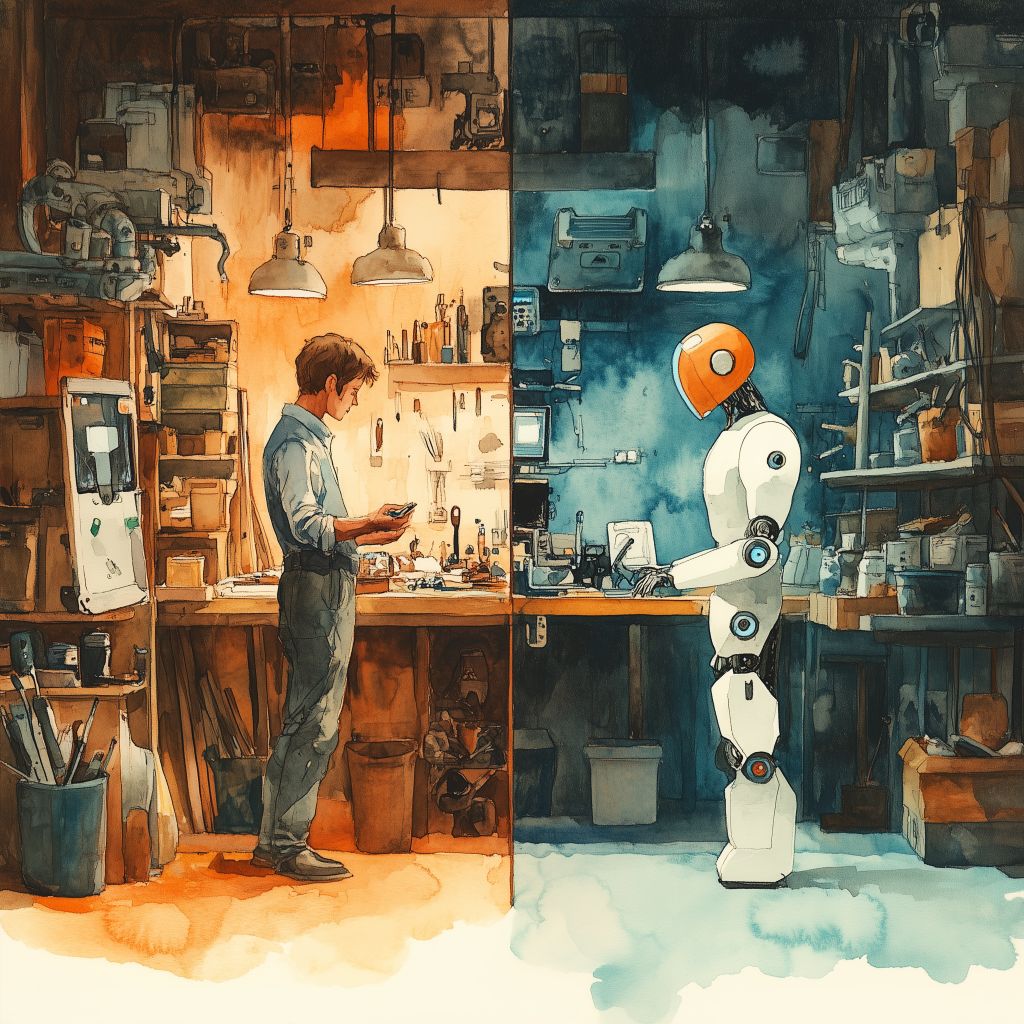
In every craft business, much revolves around communication – internally as well as externally to the customer. No deals, no orders without smooth exchange. This is exactly where AI can score twice. Language models like ChatGPT provide high-quality texts in record time, and AI chatbots take customer service to a new level.
Internal Communication and Documentation
Internally, AI tools act as digital helpers: They summarize protocols, sort emails, remind employees of overdue tasks, and answer technical questions. This means less time spent in conference calls and annoying email back-and-forth. Teams remain efficient in communication without having to search for the right information. And if someone needs technical instructions? LLM-based assistants deliver appropriate explanations directly – without hours of googling.
Customer Communication and Around-the-Clock Service
Externally, AI enables customer service that is fast and available at any time of day. Chatbots on the website or in messenger apps answer common questions, make appointments, or inform about the status of an order – around the clock, without pulling the tradesperson away from the workshop. Of course, if things get complicated or a personal conversation is desired, it is immediately forwarded to a real employee.
A real highlight is intelligent answering machines that take calls, ask for the most important details, and document everything neatly. The phone rings, the AI talks briefly with the customer, and the business manager gets an organized list of all inquiries in the evening. No more annoying interruptions while working in the workshop. This means more focus on craftsmanship – and customers still feel heard.
Important to understand: AI does not replace humans – but it takes over many tiring standard inquiries and ensures that everyone is served quickly. This gives the tradesperson time for real service, where personality and craft expertise count.
Automation of Manual Processes Through AI
Constant repetitions and dull routines are important but consume valuable time. AI and agent systems can take over these tasks. This explicitly does not mean: "Robots instead of humans!", but rather: "Robots as colleagues in the background who easily handle annoying detailed work."
For example, quote creation: Instead of manually typing the same quote over and over again for each customer, AI can automatically compile it based on previous data, current material prices, and customer requirements. This saves hours daily.
Invoicing and ordering are also excellently suited for automation: Automatically checking incoming invoices, posting them, and even formulating queries if necessary – AI does it without complaining. The system orders materials on its own when inventory falls below a minimum level. This alone takes a lot of pressure off the team.

In the workshop area itself, AI takes on the role of a smart assistant. Example metalworking: A camera plus AI tool checks welds in real-time and warns as soon as something looks faulty. Or AI-controlled robots take over repetitive tasks like drilling or painting, while human tradespeople focus on more demanding work. This reduces the error rate, quality remains high, and employees experience relief.
Integration with Existing Skilled Trade Software
A critical success factor is the seamless integration of AI solutions into the existing software landscape. Most skilled trade businesses already use specialized industry software like Handwerkersoft, Label Mobile, Streit V.1, or craftcloud. Modern AI solutions offer standardized interfaces (APIs) that enable problem-free integration. For example, customer inquiries from the AI chatbot flow directly into the CRM system, or material orders are automatically recorded in the ERP software.
Particularly important: The integration does not require a complete change of existing systems. Rather, individual AI modules can be targeted where they bring the greatest benefit. This allows businesses to proceed step by step and digitize additional areas only after a successful testing phase.
It is important that automation is done with moderation. Handcraft remains handcraft, and the value of a real unique piece is not lost just because AI takes over some preliminary work. AI should be understood as a tool – similar to computer control for milling machines or an exoskeleton for lifting. It makes everyday life easier while the professionals shine with real skills.
Intelligent Planning and Resource Management
Planning in the skilled trades is a category of its own: You have to coordinate orders, distribute employees and machines, keep an eye on deliveries – and then the weather or a short-notice sick leave throws everything off. AI-based tools act here like a forward-looking coordinator who keeps all these variables in mind and makes quick decisions.
Order planning: If a business has umpteen customers and construction sites running simultaneously, an AI agent in the background can plan routes, reschedule appointments (if the weather doesn't cooperate), and dynamically reorganize the team. You no longer have to spend hours poring over spreadsheets because the AI constantly calculates all factors – from traffic to the urgency of the order to the availability of specific tools.
AI also shines in inventory management: No more panic when the wood suddenly runs out, or 500 liters of paint are accidentally ordered twice. By looking at historical consumption data, ongoing projects, and potential trends, the system organizes the optimal order quantity and avoids overstocks or shortages.

Another real killer feature is predictive maintenance: Sensors on machines and vehicles constantly send data, and AI models detect impending malfunctions. This means: maintenance before something actually breaks. Less downtime, schedulable repairs, relaxed team. This keeps the business stable.
Additionally, AI helps with quote calculation: Anyone who has ever had to recalculate uncomfortably knows: "Getting it wrong" can be expensive. AI analyzes past projects to create realistic time and cost estimates.
In summary: AI tools for planning and resource management offer a completely new level of overview. You finally have peace for your core business because a digital planner is busy around the clock eliminating potential pitfalls.
Practical Examples: AI as Digital Helper in Everyday Craft
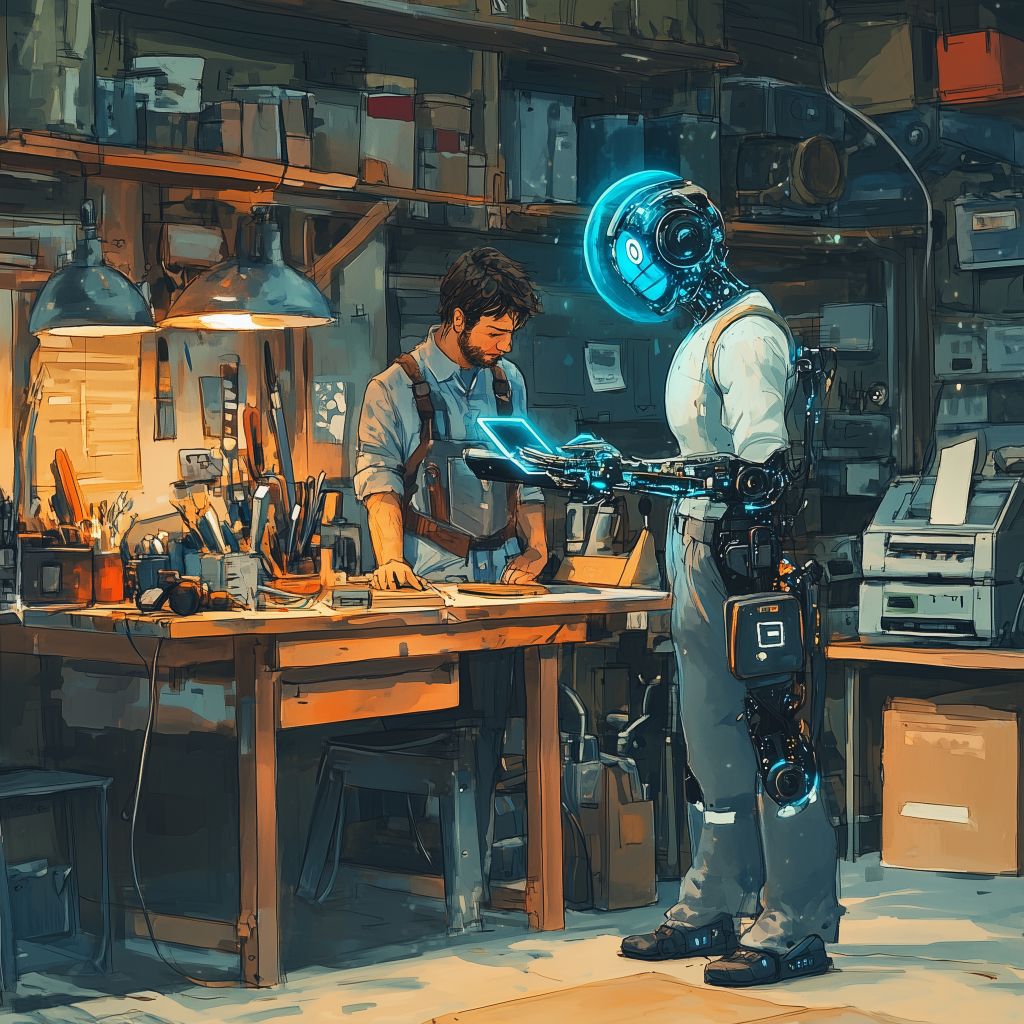
Theory is all well and good – but what does it really look like? Two fictional but realistic examples to illustrate how smart AI systems can change craft processes:
Müller Carpentry – The Digital Apprentice
Family business, small team. The master carpenter is with customers or at the circular saw during the day, has little desire for office work in the evening. An AI-based assistant functions like a kind of ultra-modern "apprentice in the office." This assistant answers calls, collects information from customer conversations via chatbot, and enters all data into order management. Or reminds of important orders. Result: Less stress for everyone, no missed information, and more time for craftsmanship.
Schmidt Heating – Predictive Service and Smart Tour Planning
Medium-sized business with many maintenance deployments. Previously, route and deployment planning was chaotic tinkering. Now an AI agent handles it: It knows where the technicians are, which spare parts are needed, and which problem has highest priority. The system proactively suggests appointment changes when an emergency comes in – and informs the customer right away. In parallel, predictive maintenance runs in real-time: Sensors in heating systems report irregularities, the AI suggests a maintenance appointment early – before everything goes cold. This results in better customer satisfaction, less hectic in the office, less waiting time.
ROI Analysis (fictional calculation example for illustration): In a scenario like "Schmidt Heating", AI-supported route planning could significantly reduce driving distances and thus noticeably cut fuel costs, while technicians handle more orders per day. Predictive maintenance additionally reduces unplanned emergency deployments and improves customer satisfaction. Whether such an investment pays for itself after one year or only after three depends on business size, deployment volume, and implementation – which is why every project should start with your own baseline measurement.
Conclusion: AI is no longer just a toy for Silicon Valley giants. It can also be used in down-to-earth scenarios – exactly where tradition and real craftsmanship meet clever technologies. The art lies in adapting the tools specifically to the respective trade with tailored solutions that the business really needs.
Challenges in AI Integration and How They Can Be Overcome
Of course, not everything is smooth sailing with AI. There are real hurdles when trying to anchor AI in the skilled trades. Many of these are cultural or organizational – less a question of technology.
- Cultural Change and Acceptance: The skilled trades live from traditions. Some employees wonder if AI will replace them or if "humanity" will be lost. The solution is transparency and involvement: Show the team early what the AI will take over, and that the actual core of the skilled trade performance remains intact. AI is the tool, the tradesperson remains the master. Training helps to reduce prejudices and build real trust.
- Organizational and Technical Hurdles: An AI project cannot be introduced without a digital foundation – it requires a certain IT structure and people who know how to handle data. Is this new territory? The right approach is to start with small pilot projects, e.g., a chatbot or automated appointment scheduling. This quickly shows what works, and the team gains confidence in the technology. Afterwards, things can be expanded step by step.
- Technological Integration and Data: AI can only shine when it connects to existing systems and has access to relevant data. It is important to set up clean interfaces and have a concept for data protection. Especially in the skilled trades, there's more sensitive customer data, so everything must be secure here. The decision between on-premises solutions and cloud applications should be well-considered.
- Investment and Benefits: In the end, it's also about money. Many smaller businesses wonder if it's worth it and if they should really invest in the "unknown". Here it's worth looking at the very concrete added value: better planning, fewer errors, higher customer satisfaction, time savings. There are also subsidies and flexible solutions that can grow with the business.
Data Protection and GDPR Compliance in Depth
A particularly sensitive point in AI implementation in the skilled trades is data protection. Since AI systems work with large amounts of data – including personal data from customers and employees – GDPR compliance is an absolute must. Here are the most important aspects to consider:
- Data Minimization: AI systems should be configured to work only with the data that is absolutely necessary for the respective process. For example, an appointment scheduling system can function without a complete customer address.
- Transparency with Customers: Customers must be informed when their data is processed in AI systems. This particularly applies to chatbots, voice assistants, or automated consulting systems.
- Data Storage in the EU: Cloud-based AI services should be preferred if their servers are located in the EU and operate in GDPR compliance. Alternatively, on-premises solutions are offered where all data remains in the company.
- Access Control and Encryption: Modern AI systems must offer robust access restrictions and data encryption to prevent unauthorized access.
- Deletion Concepts: It must be clearly defined when and how customer data is deleted from the AI system, especially when customers exercise their "right to be forgotten."
The good news: There are now AI solutions that have been specifically developed for German SMEs and craft businesses and work in GDPR compliance from the start. When selecting the provider, attention should be paid to appropriate certifications and references.
Cost Framework for AI Implementations in the Skilled Trades
The investment costs for AI solutions vary considerably depending on the scope and complexity. Here is a realistic classification:
- Entry-level Solutions (€1,000-5,000): AI-supported chatbots for the website, simple appointment scheduling systems, or pre-configured AI assistants for email sorting and document management.
- Middle Segment (€5,000-15,000): Customized process optimization solutions for specific trades, integration into existing industry software, AI-supported quote and calculation systems, basic predictive maintenance systems.
- Complete Solutions (€15,000-50,000): Fully integrated AI platforms covering customer management, resource planning, employee deployment, inventory management, and predictive maintenance. Including customization, employee training, and ongoing optimization.
Also to be considered are the ongoing costs through licenses or subscriptions, which typically range from €50 to €500 per month, depending on the range of functions and the number of users.
Funding may be available for such investments – however, the program landscape changes continuously and must be checked before the project starts:
- INQA Consulting: The Initiative for New Quality of Work can support digitization and process optimization; program access and conditions have to be checked individually.
- Federal Programs: Former grant programs such as "Digital Jetzt" or "go-digital" have since expired; applications are no longer possible there. Which federal funding currently applies should be researched on a day-to-day basis.
- Regional Programs: Many German states have their own digitization funding programs specifically for craft businesses.
- KfW Loans: Favorable financing options for digital transformation with low interest rates and long-term repayment plans.
With the right combination of funding, the actual costs can be reduced. The application may seem time-consuming at first, but it can be worthwhile – chambers of skilled trades provide free advice here.
In short: There are hurdles, but all are solvable when approached with a clear view and experienced partners.
First Steps: Entry Roadmap for Craft Businesses
The path to successful AI integration begins with small but targeted steps. Here is a concrete roadmap for craft businesses that want to start with AI:
- Inventory (2-3 weeks):
- Identify time-intensive routine tasks and processes with frequent bottlenecks
- Record which digital tools are already in use (industry software, office programs, etc.)
- Conduct conversations with employees to understand their biggest "pains" in everyday work
- Select Quick-Win Project (1 week):
- Choose a simple but noticeable use case (e.g., automated email processing or AI-supported quote creation)
- Define clear success criteria: What should improve? By how much?
- Evaluate Partners & Solutions (2-3 weeks):
- Research specialized providers for craft businesses
- Obtain concrete offers and check references
- Inform yourself about funding (chambers of skilled trades provide advice here)
- Implement Pilot Project (4-6 weeks):
- Start with a limited area or team members
- Accompany the introduction with short, practical training
- Establish a simple feedback system for quick adjustments
- Evaluate and Scale (ongoing):
- Measure the improvements achieved against the defined criteria
- Collect improvement suggestions from the team
- Plan the next AI application based on the experience gained
This roadmap can typically be completed in 3-4 months and leads to the first measurable results without overwhelming the business. The most important aspect: With each step, the team develops more understanding and openness for digital innovation.
Conclusion: Skilled Trades 4.0 – Securing the Future, Preserving Values
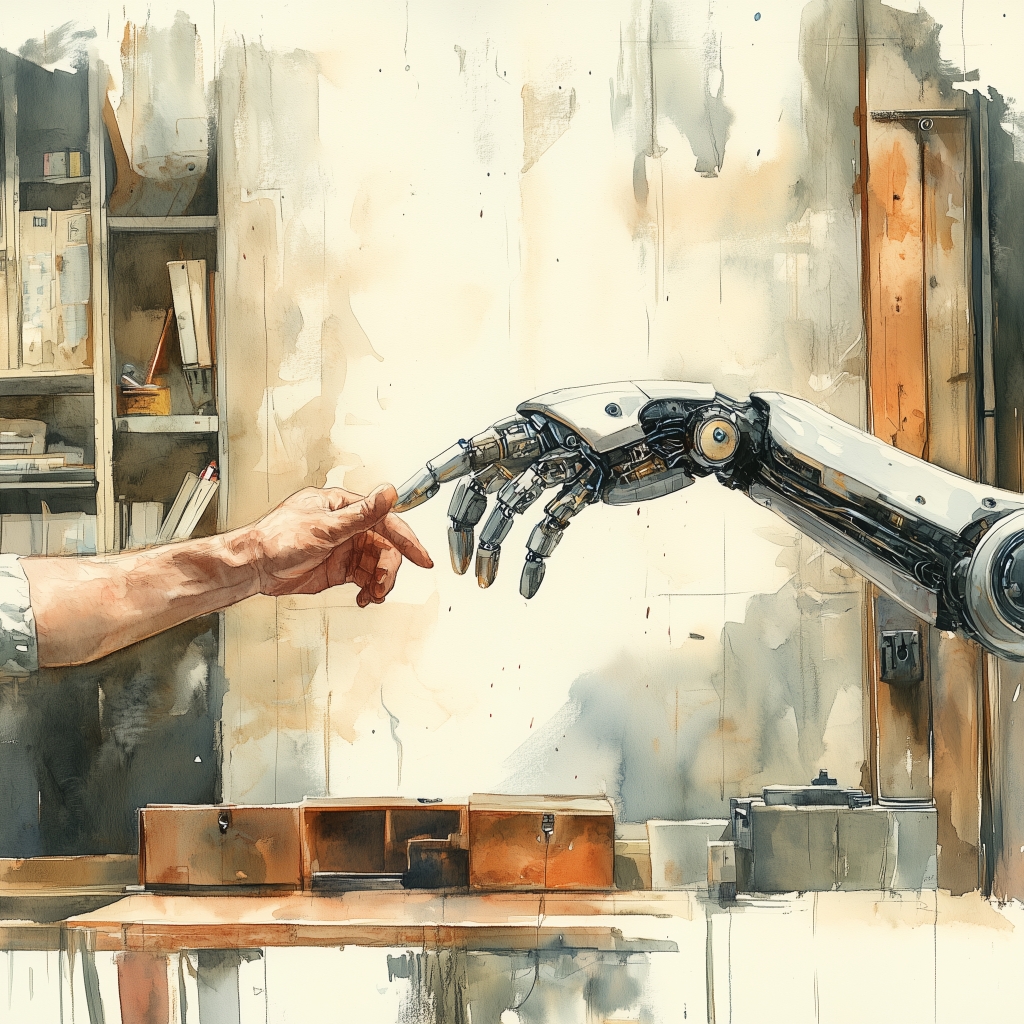
The skilled trades and digital AI systems don't exclude each other. Quite the opposite. With agents, LLMs, and co., you can become drastically more efficient as a skilled trade business without giving up what makes you special: craftsmanship, individuality, and genuine trust between you and your customers. The crucial thing is that the AI solution fits – with the processes, with the team, with the values.
This is exactly what kiba.berlin stands for: Digital transformation, AI integration, and agent-based process optimization specifically for skilled trade businesses and SMEs. We understand that new technologies must be built in to support the human element – and that tradition and personal style remain untouched. Where AI functions more as a helper, a business can concentrate on what makes it strong as a master business: delivering good work.
Curious? Write to us. Let's think together about how AI and agent systems can advance your business without losing your identity as a craftsman. The world is changing rapidly right now – we ensure that you not only keep pace but actively shape the changes.
Shaping the Future Together
kiba.berlin – AI for the Skilled Trades, competent, approachable, and always ready to rethink tradition together.
32 AI Workflows for SMEs
Free practical guide with cost estimates, decision matrix, and funding guide for SMEs.
Download PDF for freeReady for the next step?
Talk to our AI experts – the first consultation is free and without obligation.
This article is also available on Medium. If you prefer the platform, you can read it there and give it some claps.
Read on MediumThis article is part of our comprehensive guide: AI for SMEs — The Complete Guide for Medium-Sized Businesses
Related Articles

Top 6 AI Tools for Process Optimization 2025: Agentic Systems for Sustainable Digital Transformation
The 6 best AI tools for process optimization in 2025: How agentic systems and clear SOPs deliver real efficiency gains for mid-sized businesses.
It’s Not Over: What the Jevons Paradox Reveals About AI and Work
Jevons paradox, AI, and work: why cheaper intelligence doesn’t automatically mean less employment—and what SMEs can learn from it.

The Golden Wave: Turning Rented Intelligence into Assets You Own
Frontier intelligence is unusually affordable today. Lasting value comes from turning it into proprietary knowledge, software, and skills.