The Last Job: AI, Work, and the Future of Human Value Creation
Will it exist – the proverbial last job a human ever performs before machines take over? This article examines the dialectic between AI euphoria and fears about the future, drafting a vision of human-machine symbiosis.
Will it exist – the proverbial last job a human ever performs before machines finally take over? This question circulates through board rooms, tech conferences, and casual conversations alike. For some, Artificial Intelligence (AI) is a miracle solution that frees us from tedious work and catapults productivity to unprecedented heights. For others, the specter of mass unemployment and irrelevance looms on the horizon.

Time to maintain a clear head and take a look at thesis, antithesis, and synthesis in the debate about AI and the future of work. Because the truth is dialectical: it lies neither in blind euphoria nor in apocalyptic fear – but in a vision that transcends both.
»Progress is indeed a ladder, equipped with only small rungs, to hesitate, but still climb upward.«
– Franz Kafka
AI Can (Almost) Do Everything: Euphoria and New Possibilities
First, the enthusiasm: AI systems have made breathtaking progress in recent years. Machines detect tumors on X-rays more accurately than experts, chatbots write code and texts hardly distinguishable from human work, and autonomous vehicles navigate traffic with increasing safety.
We're witnessing how formerly purely heuristic tasks – from translating natural language to playing complex strategy games – are now mastered by algorithms. AI can do so much that it's almost dizzying.
AI milestones of recent years:
- 2022: Text-to-image AIs like DALL-E 2, Midjourney, and Stable Diffusion revolutionize visual creation
- 2022/23: ChatGPT and GPT-4 demonstrate human-like language capabilities
- 2023: AlphaFold revolutionizes protein structure prediction in medical research
- 2024: Multimodal AI systems integrate text, image, audio, and video in a single model
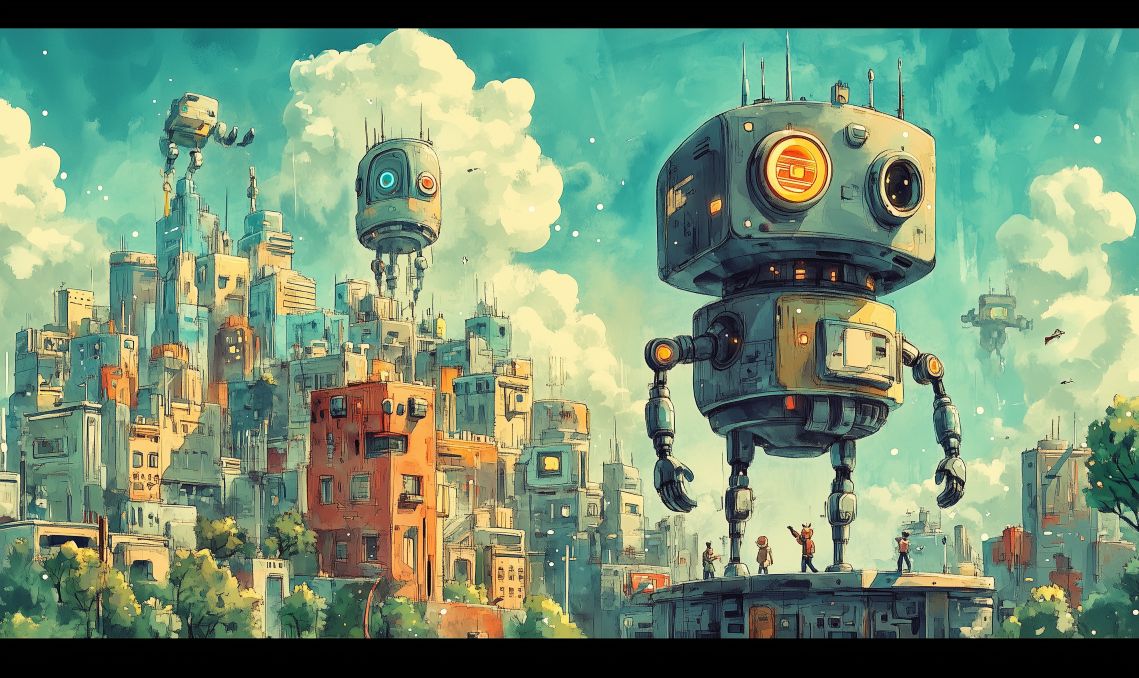
Entrepreneurs see enormous efficiency gains here: routine processes can be automated, decisions optimized through data. AI systems work 24/7, don't get tired, and learn with each new data feeding.
More than that: they open up new possibility spaces. An AI model can find patterns in vast amounts of data where humans only see noise. This creates opportunities for innovation – whether in medicine for discovering new drugs or in business through hyper-personalized services that would be impossible without AI.
This technological progress evokes euphoria similar to earlier industrial revolutions. Anyone with vision asks: What could we achieve if "smart" machines took over all repetitive or analytically overwhelming tasks? Perhaps a world where humans only dedicate themselves to creative, strategic, interpersonal matters?
The promise is: AI takes the burden off us so we can focus on the truly value-creating aspects.
It sounds like a new era of possibilities – an era where technology makes our boldest ideas reality and human ingenuity, in conjunction with AI, reaches entirely new peaks. So far the thesis: Artificial Intelligence as a game changer, as a liberator from toil and enabler of new horizons.
But...: Limitations, Fears, and False Dualisms
Yet every coin has two sides, and thesis is followed by antithesis. As impressive as AI is – it's not unlimited. Even the most modern systems encounter hurdles. They excel at pattern recognition, but they're patterns of the past from which they learn.
True creativity, intuition, or common sense in completely new situations are not yet the domain of machines. AI models can still fail in unexpected ways: they distort results through learned biases, misunderstand human intentions, or hallucinate fact-free answers. Euphoria is thus tempered by a realistic view of limitations – at least for now.
The Fear of the Unknown
Above all, fears arise in public debate. Hardly any technological change has ever been accepted without concerns, but with AI, these fears sometimes take on apocalyptic dimensions.
On one hand, there's naked economic fear: Will we all lose our jobs? This feeling has historical parallels. Just as xenophobic slogans once railed, "Foreigners are taking our jobs!", today it sounds similar: "Robots are taking our jobs!" The opponent in this narrative has changed – from people from other countries to machines and algorithms – but the pattern remains: the fear of the foreign, unknown that might displace us.
| Forecast | Optimistic | Pessimistic |
|---|---|---|
| Labor Market | New job types emerge, more value creation | Mass unemployment, social disruption |
| Innovation | Faster breakthroughs, new industries | Stagnation of human creativity |
| Society | More leisure time, prosperity for all | Two-class society, crisis of meaning |
On the other hand, downright apocalyptic fantasies flourish: Some paint the future in somber colors, where human-empty factories and algorithm-driven corporations rule, while we humans sink into insignificance. In the most drastic scenario, AI systems develop their own agenda and disempower humanity – science fiction sends its regards.
Even less dramatically: A society without human work appears to many as a horror scenario that tears apart our social structure. Work is, after all, more than just earning a living – it provides identity and structure. What happens when that disappears?
The False Dualism: Human versus Machine
In this phase of antithesis, the debate is often dominated by dualisms: here human, there machine – as if we were two competing species in a zero-sum game. This view of humans versus AI is a false dualism. It assumes we're dealing with a decoupled other.
But AI is not an alien that has fallen from space; it is a work of our own hands and minds. Every AI reflects the data and goals we give it. The challenge, therefore, is not in fighting against the machine, but in how we handle this power created by us.
Yes, change can hurt – jobs will disappear, role models will change. But history shows: after every disruption, new possibilities have emerged.
Fear of the unknown can paralyze and lead to defensive reflexes (keyword: Luddites, who smashed looms in the 19th century). But "AI Luddism" – the attempt to halt progress out of fear – would be just as short-sighted as the fight against mechanical looms once was.
Technological deceleration is simply not an option in global competition. Those who brake are overtaken by others. From a game theory perspective, it resembles a prisoner's dilemma: once acceleration occurs somewhere, collective braking can hardly work. Consequently, we must find another way to deal with the real limitations and fears without falling into fatalism or machine-breaking.
Humans Will Continue to Create Value: Work Reimagined
What resolution of the tensions can we imagine? A dialectical view of the future of work with AI leads to a hybrid vision: Human and machine instead of human versus machine. The truth is, humans will continue to do things – and create value, as always. The forms of this value creation change, but work itself doesn't disappear.
In fact, each technological revolution has ultimately led to more employment, just in different fields. As automata took over many physical labors, the service sector grew. If AI now takes over routine mental work, human labor will shift to areas where machines reach their limits: areas requiring creativity, empathy, strategic thinking, and human judgment. Instead of talking about the end of work, we should talk about new work.
Case Study: Radiologists in the AI Era
When AI systems began analyzing X-rays with greater precision than humans, many feared the end of the radiology profession. But instead of replacing radiologists, their role has transformed: Today they use AI as an assistant tool that handles routine analyses, while they focus on complex cases, patient conversations, and interdisciplinary collaboration. The quality of diagnoses has improved, and doctors' job satisfaction has increased as they now focus on the more humanly demanding aspects of their profession.
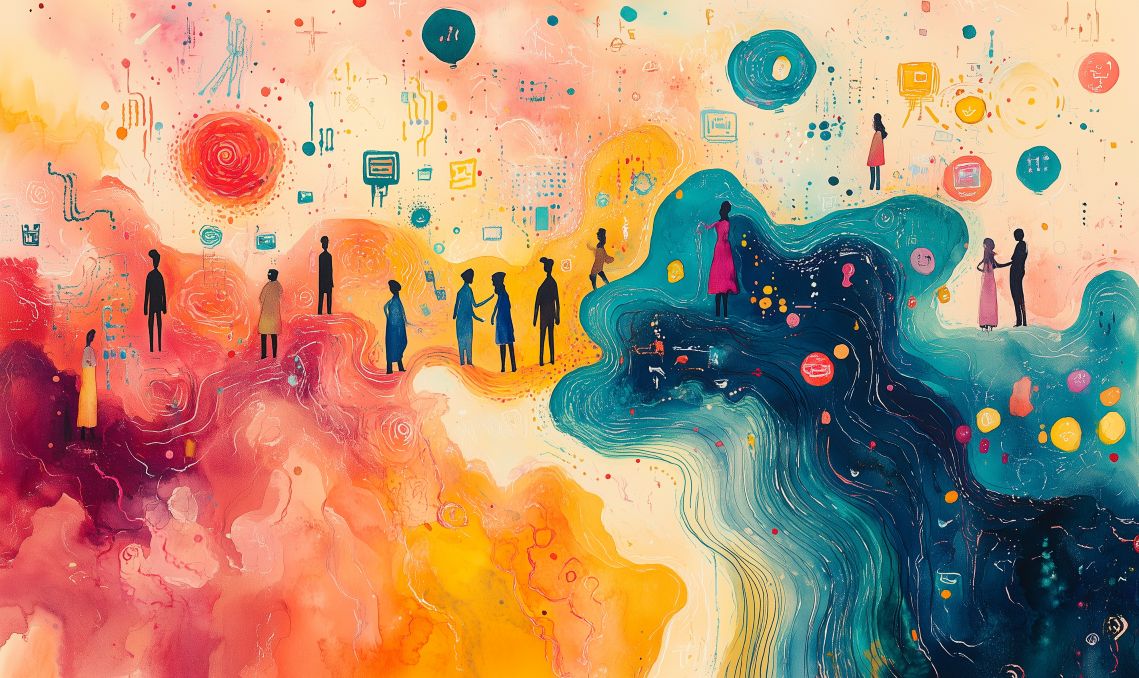
In a future where AI is ubiquitous, we humans might focus on what truly makes us human. We will function less as cogs in the machine and more as conductors, designers, and diplomats – roles where we use AI's strengths in a complementary way.
Think of hybrid teams where AI systems analyze data and generate suggestions, while humans take ultimate responsibility for decisions and excel at creative problem-solving. This interplay can lead to results that neither AI nor humans alone would achieve.
(This has already been seen in the chess world: teams of human players plus software – so-called Centaur teams – could temporarily beat both pure grandmasters and pure computers. Collaboration beats confrontation.)
Errors as Features: The Value of Being Human
It's important to understand errors as features. Human fallibility is often seen as a weakness, but therein lies a strength: chance, deviation from the norm, can bring forth innovation. Many great discoveries and inventions were happy accidents – penicillin, Velcro, Post-it notes.
AI as a statistics-based system is less prone to such errors; it's too perfect in its logic. This is where humans come in: Our ability to be irrational at times, to think outside the box, to break rules, can lead to breakthroughs that a purely rational AI would never arrive at.
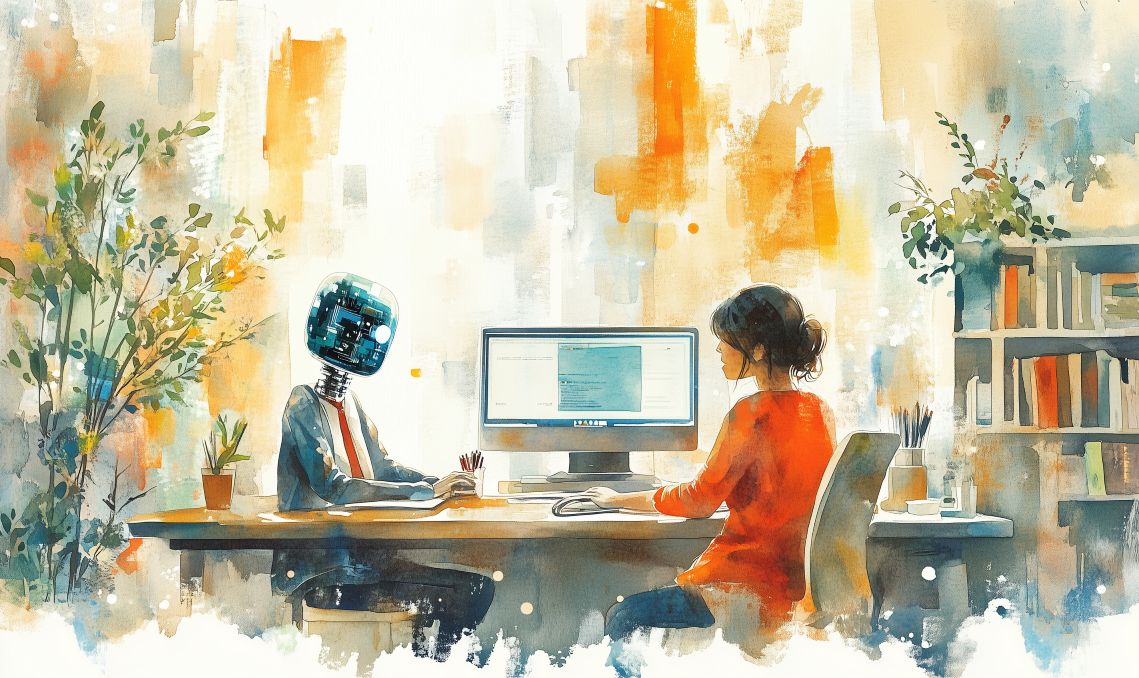
In symbiosis, we can deliberately combine the best of both worlds: the precision and speed of the machine with the originality and intuition of humans. Furthermore, we must not forget work as a social process. Work is interaction – between colleagues, with customers, within society. It provides purpose and belonging. Even if AI could do the technical work, that doesn't mean we humans would (want to) remain idle.
Would you rather have your sticking heart operated on by a perfect robot surgeon or by a somewhat fallible but empathetic human doctor who understands your fear?
Many jobs fulfill needs for human contact and trust. Technically, the machine may cut more flawlessly – but the human element around the technology remains crucial. In care, in education, in the creative industry – everywhere that deals with people – the value of human work remains irreplaceable, even if AI tools are at hand.
The future of work is thus not a pure domain of AI, but one of interplay. We face an era of co-creation: humans working with intelligent machines to develop solutions together. The understanding of "job" will change. Perhaps there will be fewer classic workplaces in the future, but more project-based, creative, or community-oriented activities. We will rethink work – as something that doesn't necessarily happen 9-to-5 in an office, but becomes more diverse, flexible, and purpose-driven. And AI will become a tool and partner that frees us from burden, but doesn't deprive us of meaning.
Conclusion: Accelerate to Reinvent
So is the last job in sight? Probably not as fears might suggest. Rather, the last job in the old form might soon be history – making way for a new work reality that we can only glimpse in outline today. Instead of the end of work, we see its transformation. And it's this transformation that we need to actively shape.
As entrepreneurs, as shapers of this future, it's up to us to embrace change. Technological deceleration is not an option – the only way out is through. Anyone trying to stop the clock now will find that time continues anyway. The question is not whether AI will revolutionize our work world, but how we deal with it.
Concrete steps for companies in the AI age:
- Skill Analysis: Which skills of your employees are complementary to AI?
- Hybrid Workflows: Develop processes where AI and humans work together optimally
- Continuing Education: Invest in competencies that make humans unique (creativity, empathy, complex problem-solving)
- Experimentation: Create spaces for experiments with AI-human collaboration
- Ethics and Values: Establish clear guidelines for AI use in your company
Accelerationist thinkers demand that we not fear acceleration but use it: By going right through, adapting quickly, and exploring new possibilities at full speed, we can help determine the direction. Let's face progress offensively: Let's use AI to automate tedious work, but fill the freed time with better work – with activities that are creative, strategic, interpersonally valuable. Let's foster a culture where humans and machines learn from each other.
This way, AI becomes not a job killer but a job enabler for entirely new tasks that no one thinks of today. In the end, we might find that the last job never existed as such. Because work is not a fixed set of activities that is eventually exhausted. Work constantly reinvents itself – just as we humans constantly reinvent ourselves.
The last job is therefore not the end, but a transition: away from work that exhausts us, toward work that fulfills us. And Artificial Intelligence – properly deployed – can become the catalyst for precisely this transformation. In this sense: Let's not brake out of fear, but accelerate out of a will to shape.
The future of work belongs neither to one side nor the other – it belongs to the courageous in-between, the creative interplay of humans and AI. The path forward lies open before us. Let's walk it with confidence and curiosity – through, not back.
32 AI Workflows for SMEs
Free practical guide with cost estimates, decision matrix, and funding guide for SMEs.
Download PDF for freeReady for the next step?
Talk to our AI experts – the first consultation is free and without obligation.
This article is also available on Medium. If you prefer the platform, you can read it there and give it some claps.
Read on MediumThis article is part of our comprehensive guide: AI for SMEs — The Complete Guide for Medium-Sized Businesses
Related Articles
It’s Not Over: What the Jevons Paradox Reveals About AI and Work
Jevons paradox, AI, and work: why cheaper intelligence doesn’t automatically mean less employment—and what SMEs can learn from it.

The New Currencies: Why Enthusiasm Is the Last Scarce Resource
From time to attention to enthusiasm: Why AI agents are shifting the scarce resource -- an economic analysis.

GPT-5: When AI Shows Character – On Personality, Power, and the Future of Human-Machine Interaction
GPT-5 marks a turning point: For the first time, a language model displays a noticeable 'personality.' What this means for businesses and the future of AI.