It’s Not Over: What the Jevons Paradox Reveals About AI and Work
Jevons paradox, AI, and work: why cheaper intelligence doesn’t automatically mean less employment—and what SMEs can learn from it.
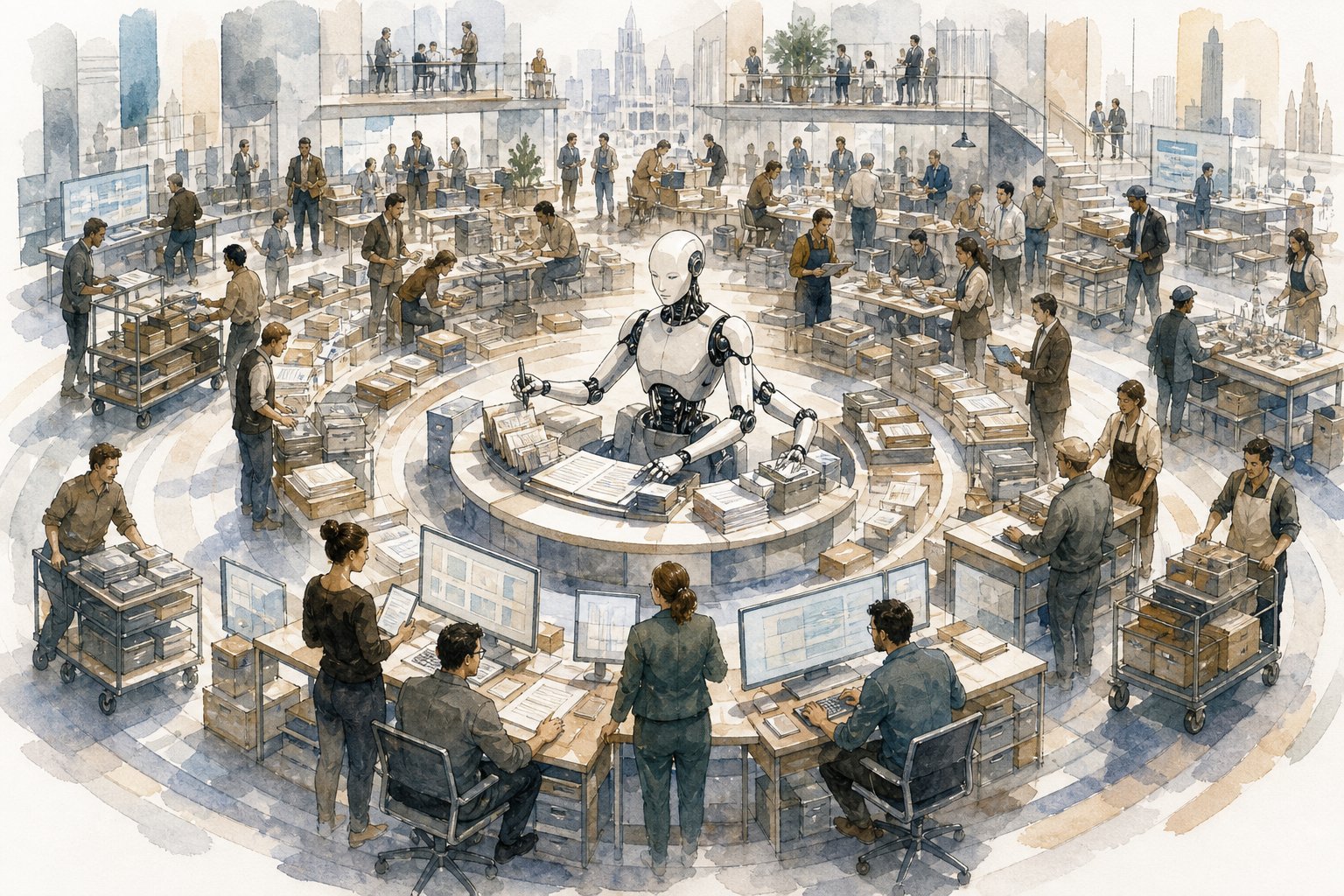
At a glance
- The Jevons paradox is not a job guarantee. It describes a mechanism: when the price of a service falls, total demand for it can rise.
- With AI, it is mainly the first draft that gets cheaper. A reliable result still requires context, review, integration, and accountability.
- Work does not disappear evenly. Some tasks lose value, while demand, quality expectations, and new tasks grow elsewhere.
- For SMEs, neither panic nor waiting is sensible. What matters is learning from a real process where AI delivers and where people still need to remain in the workflow.
“It’s over.” This line now appears with remarkable reliability whenever a new AI model builds a website, programs a game, or completes a complicated work assignment in minutes. Sometimes it is meant as a joke. Often it is marketing. And sometimes real fear sits behind it.
The capabilities of these systems are impressive. There is no point pretending otherwise. Some tasks that would have required several days from a specialist just a few years ago now fit into a single afternoon. Some activities are becoming less valuable as a result. Some roles will change fundamentally.
But “a service becomes dramatically cheaper” does not automatically mean “we need less of it overall.” That is exactly where an old economic idea becomes useful: the Jevons paradox.
Not as a sedative. Not as a law of nature. But as a better question.

Jevons does not give the all-clear—he gives us a counterquestion
In 1865, the British economist William Stanley Jevons examined in The Coal Question why more efficient steam engines did not simply reduce coal consumption. A machine needed less coal for the same output. That made its use cheaper, more economically attractive, and viable in more areas. The individual application became more efficient, but society-wide usage expanded.
That later gave rise to the term Jevons paradox: efficiency can eat away at part of the expected savings or even increase total demand. The point is not that this must always happen. Research on rebound effects shows precisely that the strength and direction depend on the market, prices, alternatives, and demand.
So the serious statement for AI is not: “Jevons proves all jobs will remain.” That would be the same oversimplification in friendlier packaging. The interesting statement is this: if machine-based cognitive work becomes cheaper, we first need to ask how strongly demand and quality expectations will react. Only then does it make sense to talk about employment, roles, and value creation.
The wrong equation: A task costs only one-tenth as much now, so we only need one-tenth as much work. The better equation: What suddenly gets built, reviewed, personalized, or improved because this task now costs only one-tenth as much?
That is not a semantic trick. It is the difference between a static world and an economy that responds to new possibilities.

Faster networks did not end the need for networks
Mobile communications offer the more vivid example from our own lifetime. Early networks enabled phone calls and short messages. Each new generation transported data more efficiently, faster, and more reliably. By a purely technical calculation, the same communication should therefore have required less infrastructure.
But the communication did not remain the same. Text messages became photos, navigation, video calls, streaming, cloud applications, connected machines, and services that would never have been economically conceivable without a powerful network. Efficiency did not “solve” demand. It expanded the volume of what we expect from the network.
The International Telecommunication Union estimates that mobile and fixed broadband traffic grew by around 30 percent per year on average between 2019 and 2023. That is not proof that every efficiency gain automatically creates more infrastructure. But it shows very clearly how quickly new capability gets translated into new usage.
With AI, we are seeing a similar possibility space. As soon as research, translation, classification, programming, or document analysis become cheaper, companies do not stay at the old volume level. They answer more inquiries. They review more variants. They build software for niches that were previously too small. They document work that used to remain undocumented. They personalize offers, support, and products.
Not everywhere. Not immediately. And certainly not without friction. But enough to make the equation “more output per person equals less work overall” look questionable.

With AI, the draft gets cheap—not automatically the result
Today, an AI can generate code in minutes. That does not mean a secure product has been created in minutes. It can draft a proposal. That does not mean pricing logic, liability, delivery capability, and customer history have been checked. It can read a delivery note. That does not mean it has been correctly assigned, approved, and posted into the existing system.
The difference sounds banal, but it is the heart of the matter: output is not the same as outcome.
In a real company, a result has to fit data, roles, and exceptions. It needs an owner. It has to flow into existing software and find its way back out again when errors occur. Someone has to decide what “good enough” means and who is liable when it was not good enough. The cheaper the machine-generated draft becomes, the more visible this previously hidden work becomes.
That is why research is increasingly distinguishing between tasks and entire occupations. In its global GenAI index, the International Labour Organization concludes that occupations are more likely to be transformed than fully automated, because most occupations consist of very different kinds of tasks.
That is not a comforting message. If six out of ten activities in a role become heavily automated, the role does not simply remain unchanged. Perhaps the company needs fewer people for the old execution. Perhaps throughput increases so much that the same people can handle more cases. Perhaps the work shifts toward consulting, control, customer proximity, or system maintenance. Usually, several of these movements happen at the same time.
AI lowers the price of the draft first. Value still emerges where people add context, judgment, integration, and accountability.
More output shifts the bottleneck upward
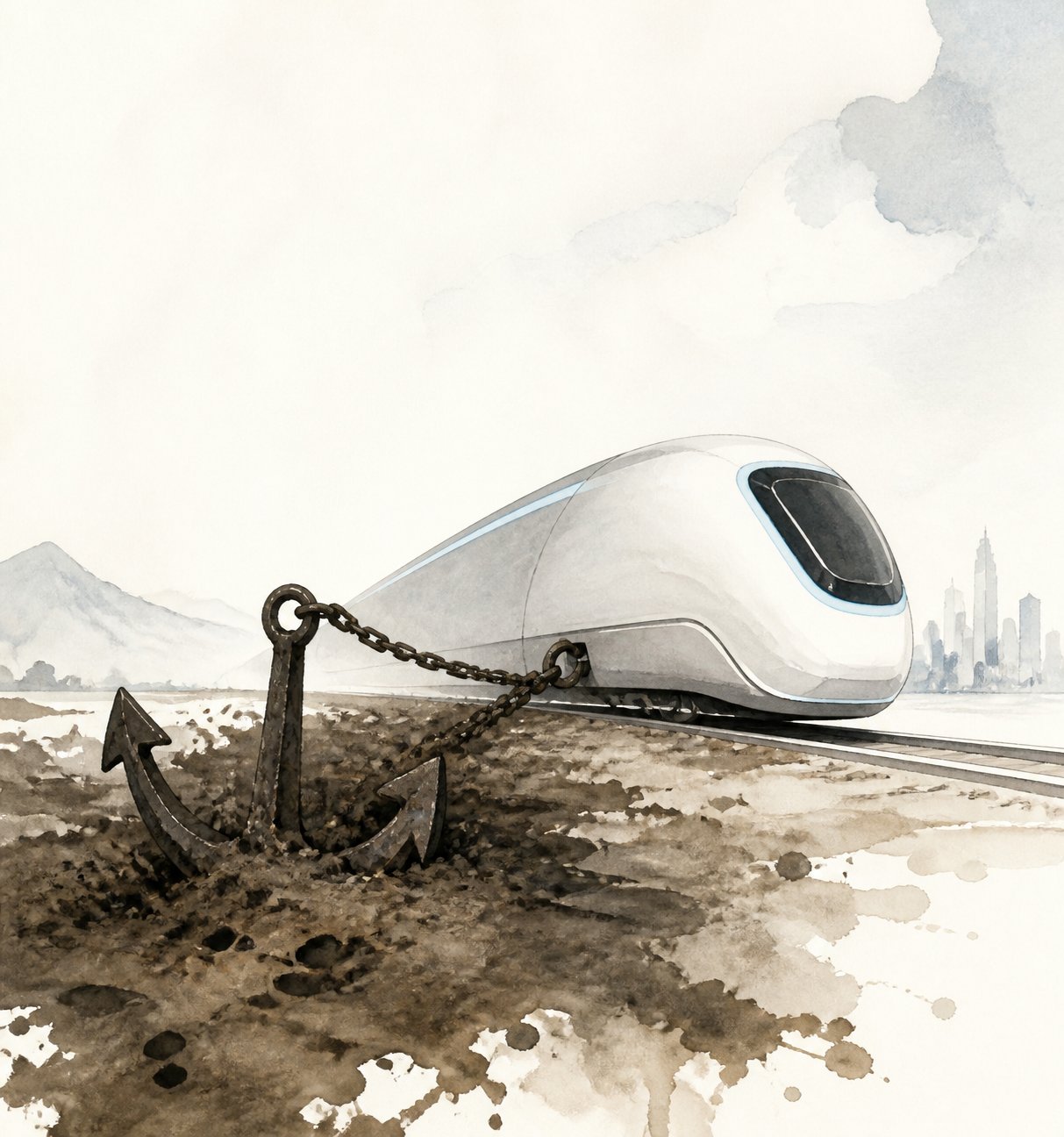
If a team can suddenly produce ten drafts instead of one, the problem is no longer: who writes the first one? It becomes: which one is correct? If software gets built faster, choosing the right feature becomes more important. If research becomes cheap, source criticism and synthesis become more valuable. If content is produced in abundance, trust becomes scarce.
The scarce resource moves. From production to selection. From formulation to judgment. From the individual hand movement to building a reliable system.
That also explains why impressive model demos and day-to-day life inside companies are so far apart. The machine runs into accumulated permissions, incomplete master data, contradictory rules, paper, liability, and people who have good reasons not to trust a new automation blindly. Organizations are not empty test environments. They have history.
The OECD review on generative AI describes exactly this dependence: good results depend not only on the capability of the model, but equally on task complexity, user skills, and their trust in the system.
This is the less spectacular half of the AI revolution. At the same time, it is the half where companies either make money or fail. A model can demonstrate a function. Value only emerges when that function becomes a repeatable workflow with clear boundaries.
The honest rebuttal: some work still loses its price
Optimism becomes unconvincing when it edits out every hardship. Activities whose value lies almost entirely in reproducible standard output are under pressure. Anyone who only writes template-based texts, builds simple interfaces without deep context, or merely transfers information from one system to another will feel the price collapse directly.
Even a growing overall market does not protect every role. The automobile created new industries and still made the profession of the coachman smaller. Transitions are unevenly distributed. They can be productive for societies and painful for individual people at the same time.
That is exactly why the phrase “It’s over” bothers me. It sells fate where design and agency are actually needed. If you only reassure people, you are not taking them seriously. If you sell them collapse as certainty, you are not taking them seriously either.
The sensible position lies in between: take the technical change seriously. Separate task, role, and business model. Examine what is becoming cheaper, what demand might react to that, and what new bottleneck emerges. Then invest in the capabilities needed at that bottleneck.
Enthusiasm here is not naive good cheer. It is the willingness to investigate the new possibility space at all. Without that willingness, even the best tool remains unused—or is used only to make the old process a bit faster.
What SMEs can do with this on Monday morning
For a small or medium-sized company, this debate does not need a grand speech about the future. It needs a good first attempt.
- Choose a real bottleneck. Not “We need to do something with AI,” but for example: quotes take too long, documents cannot be found, or follow-up questions are blocking service.
- Break down the outcome. Where can AI draft, classify, or search? Where is review, approval, and explicitly assigned accountability still required?
- Measure before and after the trial. Throughput time, rework, errors, and acceptance are more meaningful than an impressive demo.
- Use the gained capacity intentionally. More cases, better quality, new services, or less backlog: decide in advance where the gains are supposed to go.
- Watch the new bottleneck. Good automation rarely ends work. It shows which next part of the system needs attention.
The practical Jevons question for companies: If this step in the work process cost almost nothing tomorrow, what would we do more often, do better, or do for the first time?
Perhaps the answer is: nothing. Then you should not automate. Perhaps the answer is: we could properly review every inquiry, complete every construction-site documentation on the same day, or finally make our knowledge findable for everyone. Then you have a meaningful starting point.
It’s not over. But it will not stay comfortable either. The capabilities of the tools are rising, and with them, expectations of products, processes, and leadership are rising too. The real race is therefore not between human and machine. It is between organizations that translate new capability into better work and those that only watch the next demo.
Problem-solving is not a solved problem. We can simply afford more demanding problems now.
Read more on kiba.berlin
Evaluate a meaningful AI lever
In the 15-minute check, we first clarify whether your company has a viable use case at all. No subsidy promises and no pre-packaged tool drawer.
Book your 15-minute AI sprint check32 AI Workflows for SMEs
Free practical guide with cost estimates, decision matrix, and funding guide for SMEs.
Download PDF for freeReady for the next step?
Talk to our AI experts – the first consultation is free and without obligation.
This article is part of our comprehensive guide: AI for SMEs — The Complete Guide for Medium-Sized Businesses
Related Articles

The New Currencies: Why Enthusiasm Is the Last Scarce Resource
From time to attention to enthusiasm: Why AI agents are shifting the scarce resource -- an economic analysis.

DeepScroll and Recursive Language Models -- Why 10M+ Context Is Practically Gold for Large Codebases
DeepScroll as an open-source tool for recursive context navigation: why 10M+ tokens for large codebases come down to architecture, not window size.

The Philosophy Factory: Why the Future of Work Does Not Lie with Machines
A CEO wants to replace 90% of his workforce with AI. Why this is the path to oblivion and how Human-in-the-Loop leads to 10x-Teams instead.